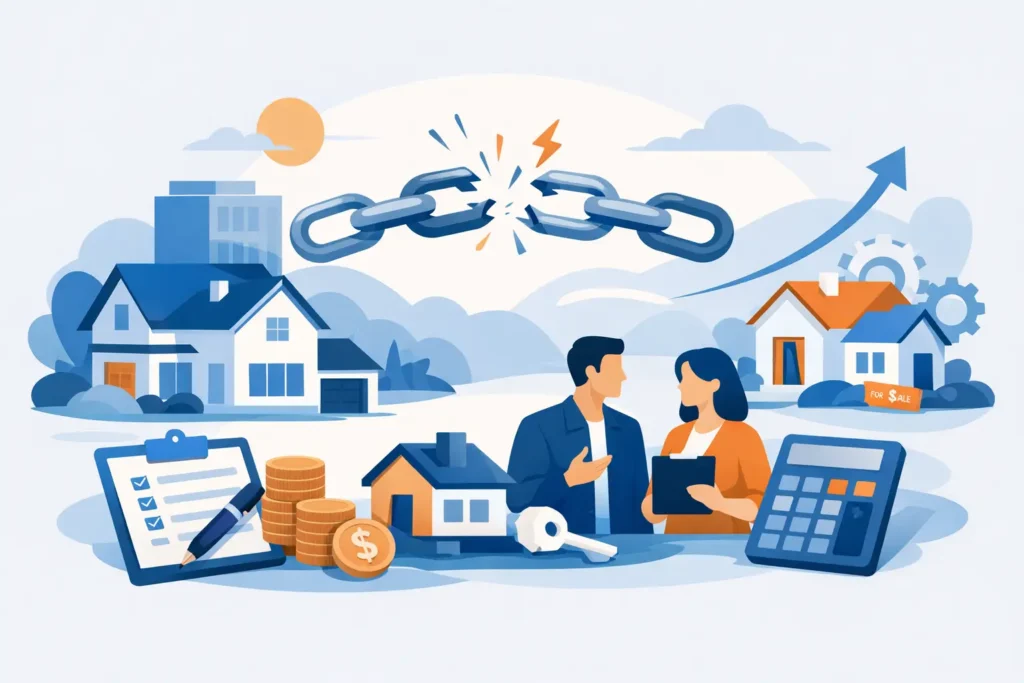
One broken link in a property chain can put a profitable purchase, a planned move or a time-sensitive investment at risk. If you are working out how to finance a chain break purchase, the key is not just finding money quickly. It is choosing funding that protects your timetable, keeps costs under control and gives you a clear exit once the chain catches up.
For buyers and investors in the UK, chain breaks usually create two immediate problems. First, you need certainty of funds fast enough to keep the seller on side. Second, you need a structure that does not leave you exposed if your onward sale takes longer than expected. That is why the answer is often specialist finance rather than a standard mortgage application started from scratch.
How to finance a chain break purchase without losing the deal
A chain break happens when one party in a linked set of transactions can no longer proceed on time. Sometimes a buyer pulls out. Sometimes a mortgage offer expires or gets delayed. Sometimes legal work uncovers an issue and the dates slip. In all cases, the pressure falls on the rest of the chain.
If you still want to complete your purchase, you need funding that can move independently of the broken chain. In practice, that often means bridging finance.
Bridging finance is short-term lending designed for speed and flexibility. It can allow you to buy a property before your current one sells, or complete on an investment purchase while a related sale is delayed. This is particularly useful where losing the deal would cost more than the short-term finance itself.
That said, bridging is not automatically the right answer in every case. The best route depends on how much equity you have, whether your exit is realistic, how quickly completion is needed and whether the property is suitable for a mainstream mortgage later on.
The main funding options for a chain break purchase
For most chain break scenarios, there are three routes worth considering.
Bridging finance
This is the most common solution where speed matters. A bridge can be secured against the property you are buying, an existing property you own, or in some cases both. It is designed to help you complete first and repay the loan later from sale proceedings or a refinance.
The commercial advantage is simple. You can act like a cash buyer in a stressed situation, which often protects the purchase and can even strengthen your negotiating position. The trade-off is cost. Bridging is usually more expensive than long-term mortgage borrowing, so the exit needs to be credible from day one.
Let to buy or remortgage funding
If you already own a property with enough equity, a remortgage or let to buy arrangement may release funds for the onward purchase. This can work well if timing is not extremely tight and your income profile supports it.
The drawback is that standard mortgage lending can be slower and more criteria-driven. If the chain has already broken and the seller wants certainty within days rather than weeks, this route may not move quickly enough.
Specialist term finance after completion
In some cases, the right strategy is to use short-term finance to secure the property and then refinance onto a longer-term product once the pressure is off. This is common for investors buying below market value, properties needing light works, or purchases that need fast completion before being placed on a buy to let or commercial mortgage.
This structure can make sense where the short-term cost is acceptable because it protects a strong deal.
What lenders will look at
When assessing how to finance a chain break purchase, lenders are usually less interested in the story of the chain itself than in the strength of the asset and the exit strategy.
The first question is security. What property is being offered, what is it worth and how marketable is it? The second is loan to value. More equity generally means more lender choice and better pricing. The third is exit. If you plan to repay from a sale, how realistic is that sale and how far along is it? If you plan to refinance, will the property and your circumstances fit long-term lending criteria?
This is where many borrowers go wrong. They focus only on speed and assume they can solve the refinance later. Experienced lenders and advisers will do the opposite. They will test the exit first, because that is what determines whether the bridge is practical rather than risky.
Costs, risks and where deals can go wrong
A chain break purchase is emotional because there is usually a deadline, a seller under pressure and the fear of losing the property. That is exactly when poor funding decisions get made.
Bridging finance can include arrangement fees, valuation fees, legal fees and monthly interest. If the term overruns, the cost can climb quickly. That does not make it bad finance. It simply means the numbers have to work.
The right question is not whether bridging is expensive in isolation. It is whether it is cost-effective relative to the deal you are protecting. If the property is a strong investment, the discount is attractive, or the onward profit is significant, the short-term cost may be entirely justified. If margins are thin and the exit is uncertain, it may be the wrong move.
Another common issue is overestimating sale speed. A buyer may say they are ready, but chains collapse, mortgage offers get revised and solicitors can still slow things down. Sensible structuring leaves room for delay. That might mean a longer bridge term, lower leverage or a backup refinance route.
How to finance a chain break purchase with a clear exit
The strongest chain break funding cases are built around a simple, believable repayment plan.
If your exit is sale, you need evidence that the property being sold is properly marketed, realistically priced and legally ready to move. If your exit is refinance, you need confidence that the completed property will meet lender criteria and that your income, rental coverage or portfolio position support the application.
In some cases, there may be more than one exit. That is often ideal. For example, you might intend to repay from the sale of your current home but still have the option to refinance onto a buy to let or residential mortgage if the sale drags on. Multiple exits reduce risk and usually make a case more attractive to lenders.
This is why specialist advice matters. A lender may be happy with the property but cautious on the timeline. Structuring the loan around a stronger exit can make the difference between approval and decline.
When acting fast makes sense – and when it does not
Speed matters in chain break cases, but speed on its own is not a strategy.
Acting fast makes sense when the property is good, the figures are sound and the fallback options are clear. This is often the case for experienced investors who know their exit routes, understand leverage and are buying with a commercial mindset.
It makes less sense when the chain break is pushing you into a purchase you have not properly stress-tested. If the property is overpriced, the monthly carrying costs are uncomfortable or the refinance depends on optimistic assumptions, rushing to complete can create a much bigger problem than the chain itself.
A good adviser will not just ask how quickly you need the money. They will ask what happens if the sale takes three months longer, if the valuer comes in light, or if mortgage criteria shift. Those questions protect profit and reduce the chance of funding becoming a problem later.
Practical steps before you apply
Before approaching lenders, get the basics in order. Be clear on the purchase price, expected completion date, deposit available and the property you are relying on for repayment. Have a realistic valuation view, not just an estate agent’s best-case number. If there is an onward sale, know exactly where that transaction stands.
It also helps to have your solicitor, broker and any selling agent aligned early. Chain break deals succeed when information moves quickly. Delays usually come from missing documents, unclear exits or legal parties working to different timetables.
For borrowers with more complex backgrounds, such as portfolio landlords, developers, limited company structures or mixed-use assets, the case should be positioned properly from the start. Presenting the wrong product to the wrong lender wastes valuable time.
That is where a specialist brokerage such as Max Property Finance can add value beyond sourcing a rate. In chain break situations, the structure, lender fit and speed of execution matter just as much as headline cost.
A broken chain does not have to kill the purchase. The right finance can keep control in your hands, provided the deal stacks up and the exit is real. When time is tight, the smartest move is not simply to borrow quickly – it is to borrow with a plan that still works when the transaction stops behaving perfectly.